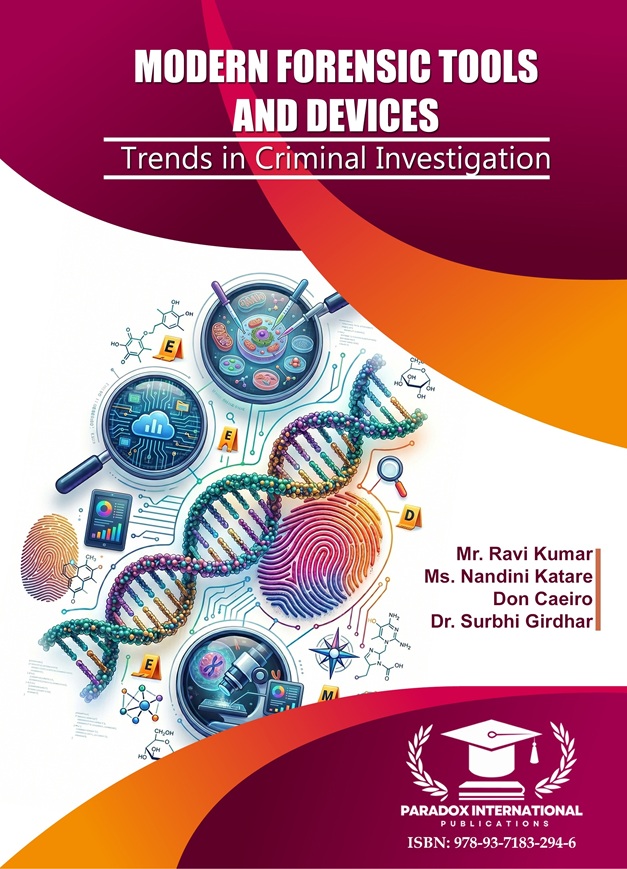
Book Title: Modern Forensic Tools and Devices: Trends in Criminal Investigation
Editors: Mr. Ravi Kumar, Ms. Nandini Katare, Don Caeiro, and Dr. Surbhi Girdhar
Chapter: 13
DOI: https://doi.org/10.59646/658/13
Author: Jayshree
Abstract
The crossroads between forensic science and judicial procedures demand an extremely fastidious assessment of the evidentiary techniques, especially those employing pattern recognition techniques. One specialty field intended to identify human beings using dental evidence known as bitemark analysis has been an important part of criminal investigations since its inception by a specialty branch called forensic odontology. There has however been growing concern about the scientific credibility and admissibility of such evidence, specifically, bitemark identification, which underscores inherent problems with the field of forensic science in general, which is highly subjective. This critical analysis has brought forth serious questions of whether bitemark evidence is accurate and scientifically supported, raising questions on whether the evidence should still be used in courts. In fact, the subjectivity of the bitemark analysis although recognized in the historical past in the courts has raised a lot of controversy on the basic validity and scientific nature (Dama et al., 2019). Such continued discussion highlights a bigger problem in the forensic sciences to shift toward methods based on experience of the expert, to one based on measurable facts and solid scientific testing. In this chapter, we will explore the history of forensic odontology, namely, the history of bitemark pattern analysis as an approved instrument of forensics to a technique that is the subject of significant scientific doubt, why this reassessment is necessary. It will also discuss the scientific basis and scientific basislessness of bitemark comparison, discussing the issues of the nature of skin as the bitemark substance and the reality that human dentition are not always constant. Moreover, the chapter will critically evaluate how powerful reports (including the National Academy of Sciences report) influenced the perception and practice of forensic odontology, in the particular context of bitemark evidence, and the ensuing demand to standardize and objectify practice more in the area. It will also discuss the current attempts to work out a more objective and statistically substantiated method of dental evidence analysis and get out of all the limitations intrinsic to the old system of bitemark interpretation.