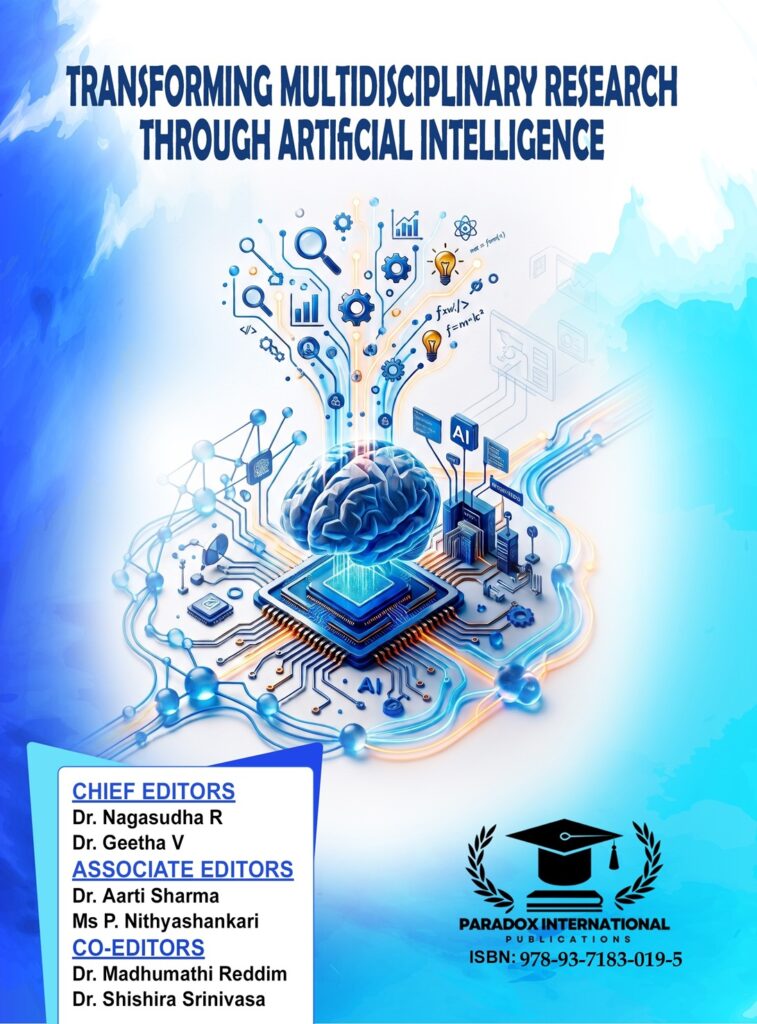
Title: Transforming Multidisciplinary Research Through Artificial Intelligence
Chief Editors: Dr. Nagasudha R and Dr. Geetha V
Associate Editors: Dr. Aarti Sharma and Ms. P. Nithyashankari
Co-Editors: Dr. Madhumathi Reddim and Dr. Shishira Srinivasa
ISBN: 978-93-7183-019-5
Chapter: 1
DOI: https://doi.org/10.59646/804/01
Authors: Ayush Gupta and Esmita Gupta
Abstract
With the increasing accessibility of organizational data, AI-powered predictive analytics has been gaining traction and reshaping decision-making processes in varying business settings. This research paper delves into the impact of AI-driven predictive analytics in corporate strategy, focusing on data-driven decision-making, forecasting, operational efficiency, and competitive advantage. The research follows a mixed-method approach with quantitative data concerning organizational performance and predictive analytics adoption being juxtaposed with qualitative data collected with structured interviews of managers and business professionals. The findings reveal that predictive analytics with AI can enhance forecasting, market understanding, and risk assessment, but infrastructure, data quality, and skills shortages continue to be issues. However, despite these hurdles, predictive analytics can enhance corporate decision-making by offering a forecast of customer behavior, optimizing resources, minimizing risk, and adjusting to market changes. Furthermore, predictive analytics can facilitate strategy decisions, as the managers appreciate forecasting and competitiveness, and employees appreciate operational efficiency and evidence-based decisions. In addition, the paper identifies key interventions and structures that can support the effective application of AI for predictive analytics, such as investing in data infrastructure, training employees, data governance, and responsible practices around the use of AI. The study shows how predictive analytics can shape corporate strategies, offering a glimpse of the transformative power it can have on conventional decision-making processes, fostering accuracy, efficiency, agility, and competitiveness. It assists business leaders, managers, technologists, and policy makers in incorporating predictive intelligence into business decisions. The findings will be valuable for the AI and business analytics literature as it will offer a take on the strategic and sustainable application of predictive analytics.
Keywords: AI-driven predictive analytics, corporate strategy, artificial intelligence, data-driven decision-making, business forecasting, strategic planning, competitive advantage, risk management, organizational performance, business analytics