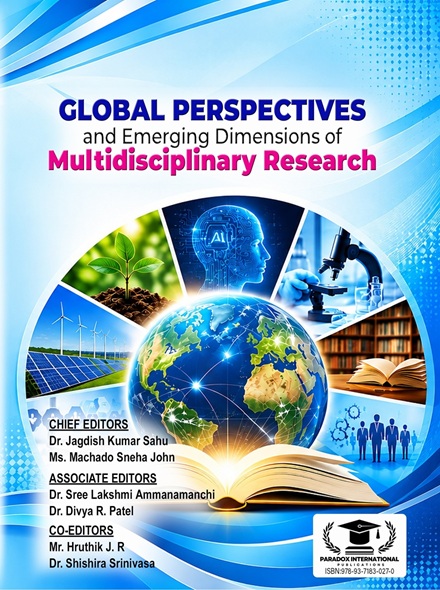
Title: Global Perspectives and Emerging Dimensions of Multidisciplinary Research
Chief Editors: Dr. Jagdish Kumar Sahu and Ms. Machado Sneha John
Associate Editors: Dr. Sree Lakshmi Ammanamanchi and Dr. Divya R. Patel
Co-Editors: Mr. Hruthik J. R and Dr. Shishira Srinivasa
ISBN: 978-93-7183-027-0
Chapter: 2
DOI: https://doi.org/10.59646/833/02
Author: Dr Amarjot Verma
Abstract
Artificial Intelligence (AI) is revolutionizing workforce planning by allowing companies to analyze workforce data, forecast future talent needs and make strategic HR decisions. In this research paper, we will investigate how AI tools can aid in workforce planning to foster organizational sustainability, focusing on efficiency, employee growth, adaptability, and overall long-term organizational performance. The research adopts a mixed-method design where quantitative data on trends in the workforce, employee productivity, turnover and organizational performance are followed by the collection of qualitative data via structured interviews with human resource professionals and organisational managers. The findings show the potential benefit of AI-powered workforce planning in enhancing talent forecasting, understanding skill gaps, optimizing workforce allocation, and enabling timely hiring and employee development. Meanwhile, challenges around data privacy, algorithmic bias, limited technology, and resistance by employees are at work in organizations. Despite these challenges, the potential benefits of effective AI integration can contribute to the sustainability of organizations by minimizing costs, optimizing resource use, and enhancing adaptability. The paper also highlights responsible governance of data, training workers to use AI, transparency in AI use, algorithmic audits, and human oversight in the decision-making process as strategic approaches to improving the sustainable use of AI for workforce planning. This research, presenting the link between AI workforce planning and organizational sustainability, illustrates how intelligent workforce technologies can help support efficient, flexible and resilient organizations. The analysis is applicable to HR professionals, organizational leaders, policymakers, and technology creators who want to leverage AI in human resource processes and ensure ethical, sustainable employment practices. The results are valuable additions to the body of knowledge regarding the development and sustainable use of artificial intelligence for HR planning and the future of HR.
Keywords: Artificial Intelligence, Workforce Planning, Organizational Sustainability, Human Resource Management, Workforce Analytics, Talent Management, Employee Development, Skill Gaps, Predictive Analytics, Sustainable Organizations.