
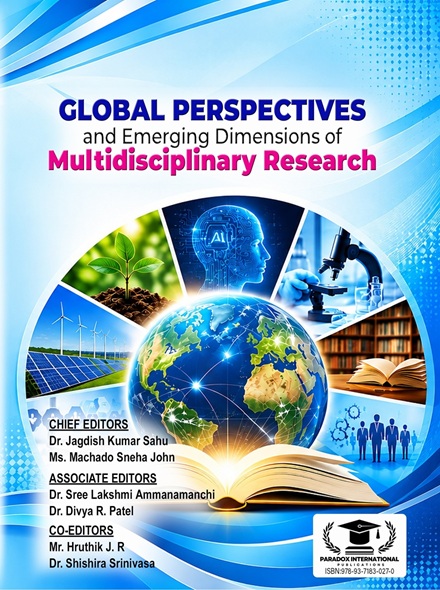
Title: Global Perspectives and Emerging Dimensions of Multidisciplinary Research
Chief Editors: Dr. Jagdish Kumar Sahu and Ms. Machado Sneha John
Associate Editors: Dr. Sree Lakshmi Ammanamanchi and Dr. Divya R. Patel
Co-Editors: Mr. Hruthik J. R and Dr. Shishira Srinivasa
ISBN: 978-93-7183-027-0
Chapter: 3
DOI: https://doi.org/10.59646/833/03
Author: Dr R Nandhini
Abstract
Gratitude interventions are becoming more popular as a positive psychological practice that could help students to deal with school difficulties and build resilience. The aim of this research paper is to examine the link between gratitude intervention and academic resilience of university students, specifically in how they deal with academic stress, overcome failures and stay motivated. This research adopts a mixed-method design which involves gathering quantitative data on gratitude practices together with qualitative data through structured interviews with university students. The findings suggest that frequent practice with gratitude interventions could be beneficial for academic resilience through the positive emotions, adaptive coping, motivation, and attitude toward academic challenges. Practicing gratitude can help students better cope with academic stress, bounce back from academic failures, and stay invested in their studies. The results also indicate that gratitude interventions can be a straightforward and easily-accessed means to promoting students’ psychological health and academic adjustment. Furthermore, the research points to the need for incorporating gratitude-based interventions into university counseling services, student support initiatives, and education to enhance students’ resilience and coping with academic stressors. This study shows that gratitude interventions have promise as a supportive strategy to help increase academic resilience in university students. The results could be beneficial for teachers, university officials, counsellors, and student support workers to find evidence-based methods to encourage positive psychological growth and academics well-being. The study also is a valuable addition to the existing literature on positive psychology in that it offers some insights regarding the contribution of gratitude to students’ resilience in higher education institutions.
Keywords: Gratitude interventions, Academic resilience, University students, Positive psychology, Academic stress, Student well-being, Coping strategies, Academic motivation, Psychological well-being, Higher education