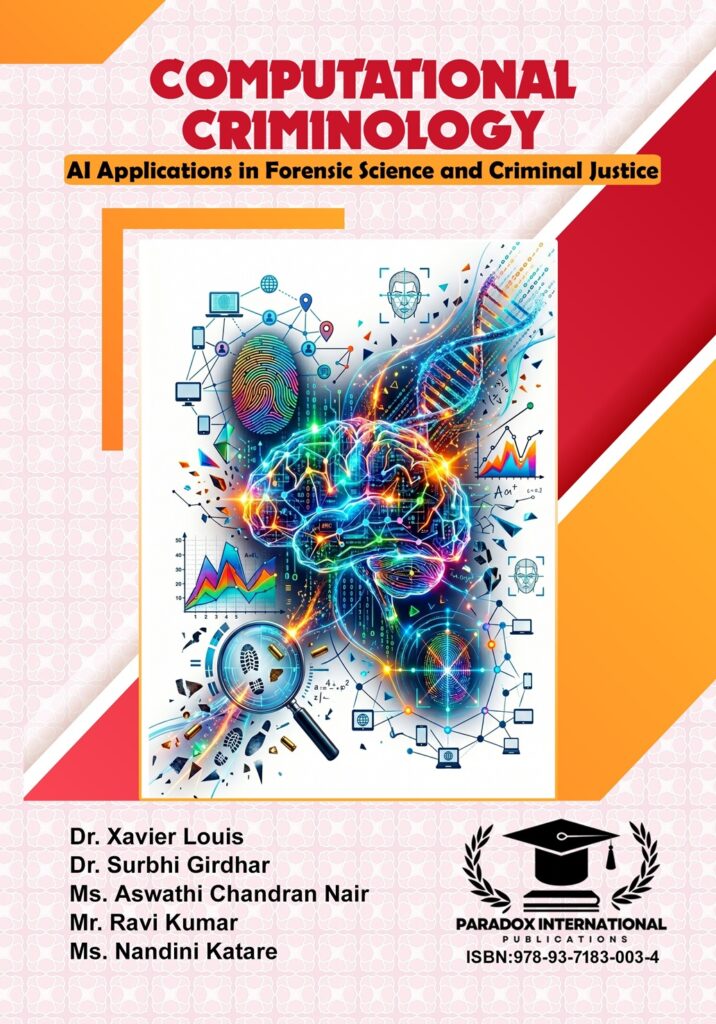
Book Title: Computational Criminology: AI Applications in Forensic Science and Criminal Justice
Editors: Dr. Xavier Louis, Dr. Surbhi Girdhar, Ms. Aswathi Chandran Nair, Mr. Ravi Kumar, and Ms. Nandini Katare
Chapter: 14
DOI: https://doi.org/10.59646/704/14
Author: D. Padmashreee
Abstract
Forensic toxicology occupies a quietly indispensable position in the contemporary investigation of suspicious death. In a substantial fraction of medicolegal autopsies by some national estimates approaching half the cause and manner of death cannot be resolved without quantitative analysis of biological specimens for ethanol, prescription medications, illicit drugs, and their metabolites.[1] The toxicologist’s task is to identify what chemical substances were present in the decedent at the time of death, to estimate their concentrations, to evaluate whether those concentrations are consistent with therapeutic, recreational, or lethal exposure, and to communicate these findings to the pathologist, the coroner, and the criminal justice system in a form that supports informed legal and medical determination.[2]
The analytical challenge has grown sharply over the past two decades. The pharmacopoeia of common forensic interest now spans thousands of substances licit medications, established illicit drugs, and a rapidly proliferating set of novel psychoactive substances (NPS) whose structures, metabolites, and lethal-concentration thresholds may be poorly characterised at the time a fatal case arrives in the laboratory.[3] Compounding this analytical breadth is the methodological complexity of postmortem interpretation: blood concentrations measured at autopsy may differ substantially from concentrations at the time of death because of postmortem redistribution; metabolite profiles depend on enzyme polymorphisms and time-since-ingestion; and the matrix effects of decomposed tissue can confound the most carefully designed analytical protocol.[4]
[1]Olaf H Drummer, “Postmortem Toxicology of Drugs of Abuse” (2004) 142 Forensic Science International 101, 103.
[2]Robert J Flanagan, Andrew Taylor, Ian D Watson and Robin Whelpton, Fundamentals of Analytical Toxicology (2nd edn, Wiley, 2020) 14.
[3]Marilyn A Huestis, “Pharmacokinetics and Metabolism of the Plant Cannabinoids” in Roger G Pertwee (ed), Handbook of Experimental Pharmacology (Springer, 2005) 657, 660.
[4]Bruce A Goldberger, “The Role of Toxicology in Forensic Casework” (2018) 42 Journal of Analytical Toxicology 1, 2.