
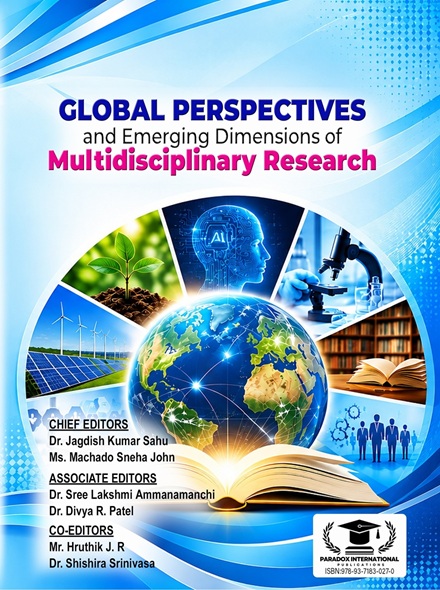
Title: Global Perspectives and Emerging Dimensions of Multidisciplinary Research
Chief Editors: Dr. Jagdish Kumar Sahu and Ms. Machado Sneha John
Associate Editors: Dr. Sree Lakshmi Ammanamanchi and Dr. Divya R. Patel
Co-Editors: Mr. Hruthik J. R and Dr. Shishira Srinivasa
ISBN: 978-93-7183-027-0
Chapter: 5
DOI: https://doi.org/10.59646/833/05
Authors: Dr. Deepali amb Prasad, and Dr. Sanjay Prasad
Abstract
Climate change has become a major environmental factor influencing wildlife species and their ability to survive in changing ecosystems. The research paper examines the impact of climate change on wildlife behaviors and the various types of behavioral changes species respond to as a result of climate change, including changes in temperature, precipitation, habitat and seasonal cycles. A mixed-method design has been used for the research, which involves a synthesis of quantitative data on alterations of animal distribution, migration, breeding periods, feeding behavior and activity patterns, as well as qualitative data gathered through ecological studies, wildlife observations and expert-based evidence. The results reveal that the migration, feeding, reproduction and activity patterns of wildlife are changing due to climate change. These adaptations can assist wildlife species to cope with short-term environmental shifts, but vary in their efficacy across species based on ecological flexibility, habitat availability, food availability and the speed of climate change. Furthermore, species living in highly dynamic environments could experience loss of habitat, and ecological disturbance. Conservation strategies and management approaches that could play a role in helping wildlife adapt are also summarized, such as habitat protection, ecological corridors, climate resilient conservation planning, long term behavioural monitoring, and remote sensing and ecological modelling. In this study, the authors explore how changes in climate and wildlife behaviour can be linked together and show that behavioural flexibility can be a significant factor in the survival of species and in resilience of ecosystems. Comparative analysis can be useful to conservation scientists, wildlife managers, and ecological practitioners interested in understanding and assisting species’ responses to climate-related change. The outcomes are relevant to other studies on climate change and wildlife ecology as they offer evidence-based knowledge on behavioural adaptations and the need to consider behavioural responses in long-term conservation and management of biodiversity.
Keywords: Climate change, Wildlife species, Behavioral adaptation, Animal behavior, Migration patterns, Habitat change, Biodiversity conservation, Ecological resilience, Species adaptation, Wildlife ecology