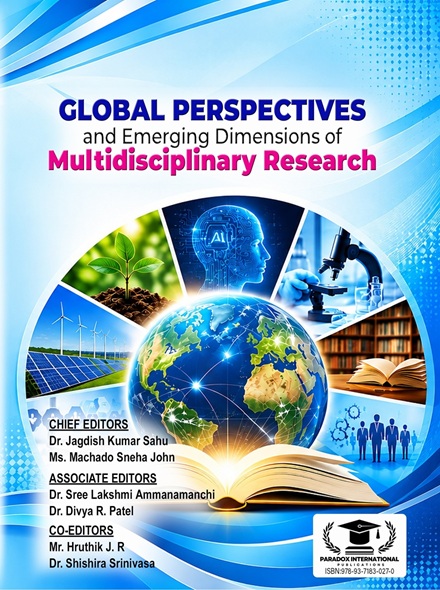
Title: Global Perspectives and Emerging Dimensions of Multidisciplinary Research
Chief Editors: Dr. Jagdish Kumar Sahu and Ms. Machado Sneha John
Associate Editors: Dr. Sree Lakshmi Ammanamanchi and Dr. Divya R. Patel
Co-Editors: Mr. Hruthik J. R and Dr. Shishira Srinivasa
ISBN: 978-93-7183-027-0
Chapter: 15
DOI: https://doi.org/10.59646/833/15
Authors: Syeda Nishat Fathima, and Sk Md Toufique
Abstract
Antimicrobial resistance necessitates a transition from empirical, population-based antibiotic prescribing toward individualized therapy guided by pharmacokinetic/pharmacodynamic (PK/PD) principles. Conventional fixed-dose regimens may fail to account for substantial inter- and intra-individual variability in antimicrobial exposure, particularly among critically ill, obese, elderly, pediatric, and renally impaired patients. Mismatch between drug exposure and the minimum inhibitory concentration (MIC) may contribute to treatment failure and selection of resistant organisms. PK/PD-guided therapy aligns antimicrobial exposure with pharmacodynamic indices, including AUC/MIC, Cmax/MIC, and %fT>MIC, according to the killing characteristics of individual antimicrobial classes. This chapter examines the evolution from empirical to precision antimicrobial dosing and discusses therapeutic drug monitoring, Bayesian model-informed precision dosing, rapid diagnostics, antimicrobial de-escalation, pharmacogenomic and biomarker-based approaches. Integration of these strategies within antimicrobial stewardship can optimize efficacy, minimize toxicity and unnecessary exposure, and support rational antimicrobial use. The chapter also highlights key analytical, educational, and infrastructural barriers to clinical implementation.
Keywords: Antimicrobial resistance; Antimicrobial stewardship; Pharmacokinetics; Pharmacodynamics; PK/PD-guided therapy; Precision antimicrobial therapy; Therapeutic drug monitoring; Model-informed precision dosing; Bayesian dosing.