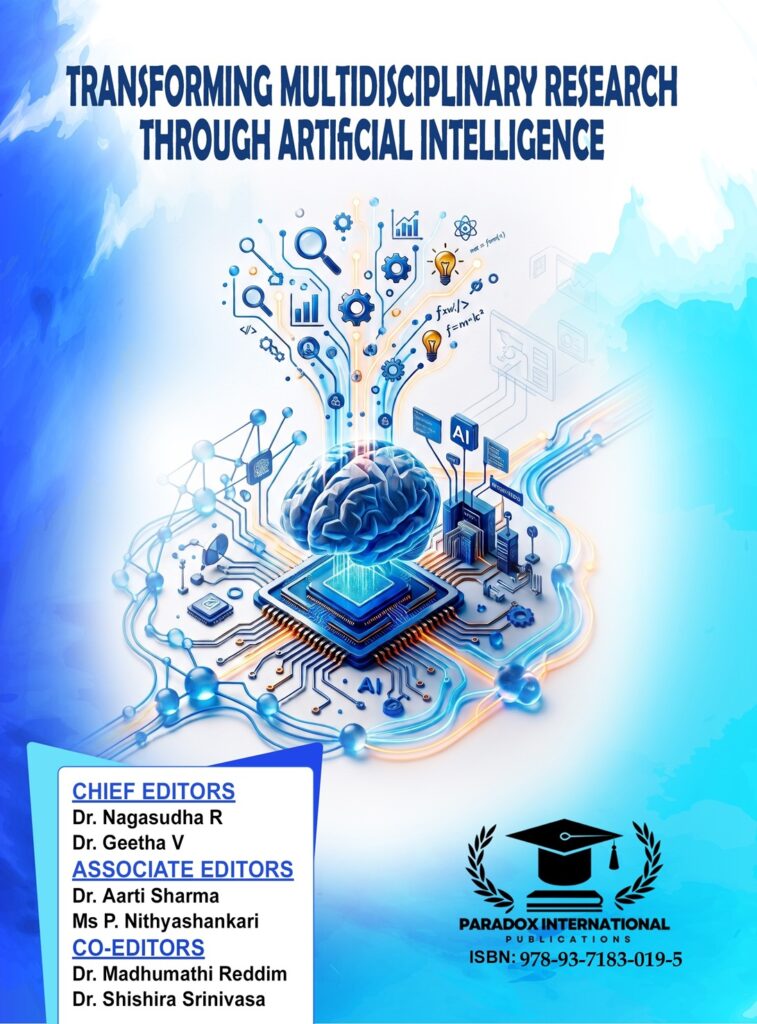
Title: Transforming Multidisciplinary Research Through Artificial Intelligence
Chief Editors: Dr. Nagasudha R and Dr. Geetha V
Associate Editors: Dr. Aarti Sharma and Ms. P. Nithyashankari
Co-Editors: Dr. Madhumathi Reddim and Dr. Shishira Srinivasa
ISBN: 978-93-7183-019-5
Chapter: 7
DOI: https://doi.org/10.59646/804/07
Author: Dr. Dayalal Sankhla
Abstract
The route to a green economy has become increasingly important in order to secure sustainable development of the economy in emerging countries. In this research paper, the authors examine the importance of green economy strategies for the promotion of economic development, environmental sustainability, resource efficiency and social benefit in emerging economies. The research design is mixed methods that uses both quantitative and qualitative data in relation to the economic and environmental indicators, and data gathered from structured interviews and secondary reports. The results indicate that the path they have taken to achieve the transition to ‘green economy’ has been different in emerging countries according to their financial capabilities, technological advancement, efficiency of institutions and nature protection measures. Countries that invest in renewable energy, efficient use of resources, and green industries and technologies demonstrate an ever-increasing number of opportunities to take measures to mitigate environmental degradation, while still promoting economic growth. If so, the emerging nations are facing a myriad of challenges, such as financial constraints, dependence on fossil fuels, lack of technology, poor regulations, and a lack of economic growth to match environmental protection measures. Nevertheless, the implementation of green economy strategies can boost employment, help achieve energy security, help fight poverty, help manage resources and help enhance long-term economic resilience. In addition, the benefits of moving towards a green economy may vary across industry and across different groups of people, and inclusive policies are required to safeguard the interests of different vulnerable groups and for a just transition. The paper further offers policy recommendations and strategies to strengthen sustainable economic development, including on investment in renewable energy, green finance, technology, institutions and environmental governance.
Keywords: Green economy, Sustainable economic development, Emerging nations, Renewable energy, Green finance, Environmental sustainability, Sustainable growth, Green technology, Resource efficiency, Climate policy