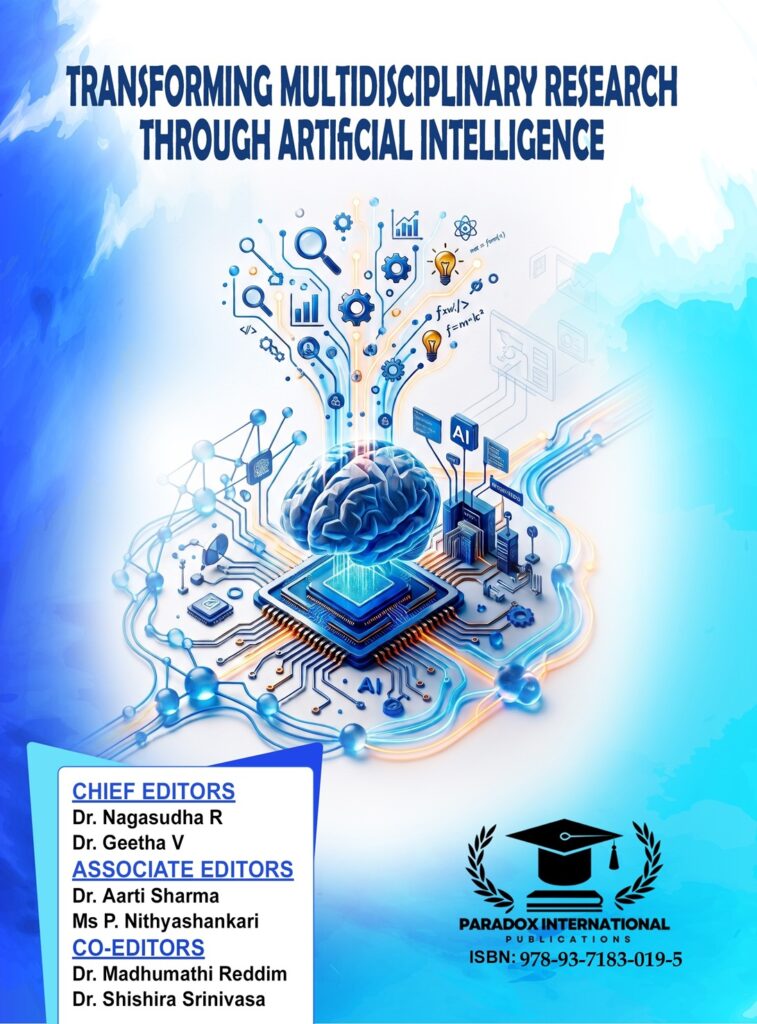
Title: Transforming Multidisciplinary Research Through Artificial Intelligence
Chief Editors: Dr. Nagasudha R and Dr. Geetha V
Associate Editors: Dr. Aarti Sharma and Ms. P. Nithyashankari
Co-Editors: Dr. Madhumathi Reddim and Dr. Shishira Srinivasa
ISBN: 978-93-7183-019-5
Chapter: 29
DOI: https://doi.org/10.59646/804/29
Author: Dr. Sumangala C Angadi
Abstract
The progress of AI has also radically transformed the use of machine translation (MT), allowing for a change in the translation process in different language and communication contexts. The aim of this research paper is to discuss the position of machine translation in the modern language communication, comparative accuracy, translation quality and results of machine translation in various languages and translation systems. The research is conducted in a mixed-method design, for quantitative data which obtained from the accuracy of translation and the error rate while the qualitative data is obtained through structured evaluation of translated text. The results indicate that there are substantial differences in the quality of the machine translations: machine translations of popular languages are more accurate, as they have more linguistic resources and better language models, while some low resource language is more difficult to translate, because there are insufficient linguistic resources and less developed language models. Despite these problems, machine translation has proved to be useful in improving multilingual communication by saving time and money in translation and facilitating efficient education, business, health care, tourism, and international communication. Not only that, but machine translation systems have the advantages of fluency and grammatical correctness, but they also have problems with context, idiomatic expressions, cultural references and specialized vocabulary. The paper also proposes solutions that can enhance the machine translation accuracy, including using multilingual data, domain-based training, better context management and human post-editing. This study reveals that machine translation accuracy and quality can impact translation practices with regard to efficiency, accessibility, and reliability.
Keywords: Machine Translation, Language Accuracy, Translation Quality, Artificial Intelligence, Natural Language Processing, Translation Errors, Multilingual Communication, Translation Systems, Human Post-Editing, Computational Linguistics