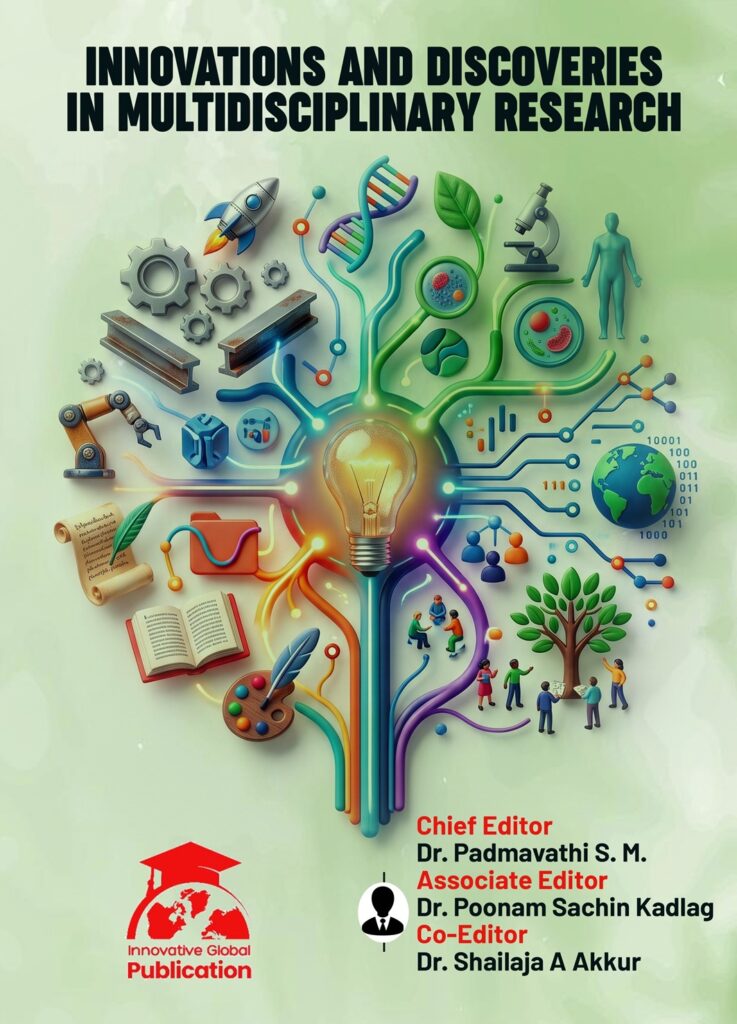
Title: Innovations and Discoveries in the Multidisciplinary Research
Chief Editor: Dr. Padmavathi S. M.
Associate Editor: Dr. Poonam Sachin Kadlag
Co-Editor: Dr. Shailaja A Akkur
ISBN: 978-81-69857-36-9
Chapter: 16
DOI: https://doi.org/10.59646/785/16
Author: Dr. Bushra
Abstract
Postcolonial literature has become one of the most influential areas of literary studies because it explores how history, culture, identity, and power continue to shape societies after colonial rule. Rather than focusing only on the political consequences of colonialism, contemporary postcolonial writing also examines the emotional, social, and cultural experiences of individuals and communities living in its aftermath. This paper explores the relationship between postcolonial narratives and cultural hybridity by analyzing the major literary trends, theoretical perspectives, and critical frameworks that have emerged in recent decades. It discusses how writers use storytelling to represent issues such as identity formation, migration, displacement, resistance, memory, language, gender, and globalization. The study also highlights the importance of cultural hybridity as a concept that explains the blending of traditions, languages, beliefs, and identities in postcolonial societies. Drawing on established postcolonial theories, the paper examines how literature challenges colonial ideologies, questions dominant historical narratives, and creates space for marginalized voices. It further considers the impact of transnational experiences and multicultural interactions on contemporary literary expression. The findings suggest that postcolonial narratives are not limited to portraying the legacy of colonialism but also emphasize resilience, cultural negotiation, and the continuous reconstruction of identity in a rapidly changing world. By integrating literary analysis with critical theory, the study demonstrates that postcolonial literature remains a powerful medium for understanding cultural diversity, historical memory, and the complexities of human experience. It contributes to ongoing scholarly discussions by offering a comprehensive perspective on how literary texts reflect evolving social realities while encouraging cross-cultural dialogue and inclusive interpretations of identity and belonging.
Keywords: Postcolonial literature, cultural hybridity, postcolonial narratives, identity, colonialism, diaspora, migration, globalization, resistance, memory, multiculturalism, literary criticism.