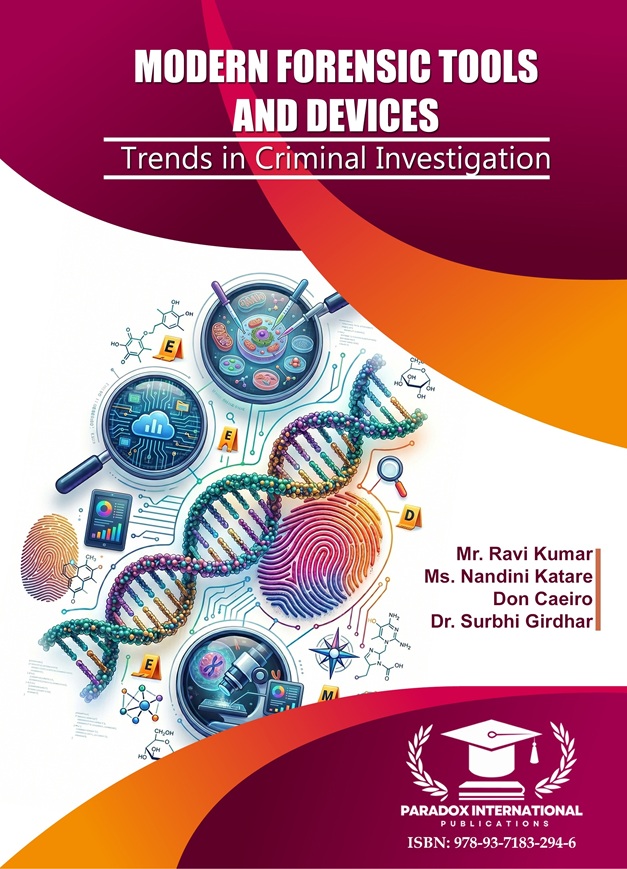
Book Title: Modern Forensic Tools and Devices: Trends in Criminal Investigation
Editors: Mr. Ravi Kumar, Ms. Nandini Katare, Don Caeiro, and Dr. Surbhi Girdhar
Chapter: 24
DOI: https://doi.org/10.59646/658/24
Author: Purva Jain
Abstract
The reliability and integrity of digital evidence are paramount in legal proceedings, necessitating rigorous quality assurance measures, standardization protocols, and accreditation frameworks for forensic tools. This is particularly crucial given that errors or biases in forensic analysis can jeopardize investigations and undermine confidence in digital evidence. Despite this critical need, research on the evaluation and validation of digital forensic tools remains limited, leaving investigators with insufficient resources to properly assess their instruments (Talib, 2016). This scarcity of robust validation methodologies presents a significant challenge to achieving the stringent quality requirements mandated by accreditation bodies like ISO 17025, which emphasizes demonstrable development and effective implementation of adequate testing and validation methods for forensic laboratories (Mattijssen, 2020). Specifically, achieving ISO 17025 accreditation, which is increasingly mandated for digital forensics organizations, highlights a gap between the desired quality outcomes and the current implementation of quality management systems within many digital forensics laboratories. Consequently, the development of comprehensive validation plans, including laboratory usage, controlled scientific testing, and peer review, is essential for ensuring the reliability and scientific foundation of forensic tools and methodologies (Studiawan et al., 2025). This imperative is further amplified by the critical observation that electronic evidence often struggles to meet scientific criteria in court, providing defense attorneys avenues to challenge its accuracy and credibility. This issue is compounded by the inherent challenges in digital forensics, where the absence of clear requirements statements in method descriptions and the reluctance of tool producers to disclose specific requirements hinder complete validation and perpetuate a gap in the evidence of correctness for both tools and methods. The existence of flaws in digital forensic software, similar to consumer and business applications, underscores the necessity for robust validation, as these vulnerabilities can significantly impact investigations by producing inaccurate evidence and subsequently affecting clients and practitioners (Almirall et al., 2020). This underscores the critical need for comprehensive validation processes, moving beyond mere vendor claims to independent and thorough testing to establish the fitness for purpose and limitations of forensic software. While universal standards for digital forensics remain challenging to establish due to the field’s rapid evolution and diverse nature, researchers can contribute to enhancing procedures by defining specific validity and reliability standards for discrete activities. Furthermore, the adoption of a process-based approach to quality management systems, as outlined in ISO 17025:2017, can significantly enhance the systematic assessment and continuous improvement of these discrete forensic activities. This systematic approach, incorporating state-of-the-art methodologies and addressing inherent risks, is vital for aligning digital forensics with rigorous forensic evaluation methods, thereby enhancing the thoroughness, accuracy, and overall effectiveness of investigations. This robust framework for quality assurance and standardization would inherently bolster the trustworthiness of digital evidence presented in legal contexts, thereby reinforcing the overall judicial process. However, the current landscape reveals significant challenges, including a “reliability crisis” stemming from the premature adoption of novel methodologies without adequate foundational frameworks, a pervasive lack of standardization and harmonization, and insufficient resources and accountability within forensic science broadly (Stoykova, 2021).