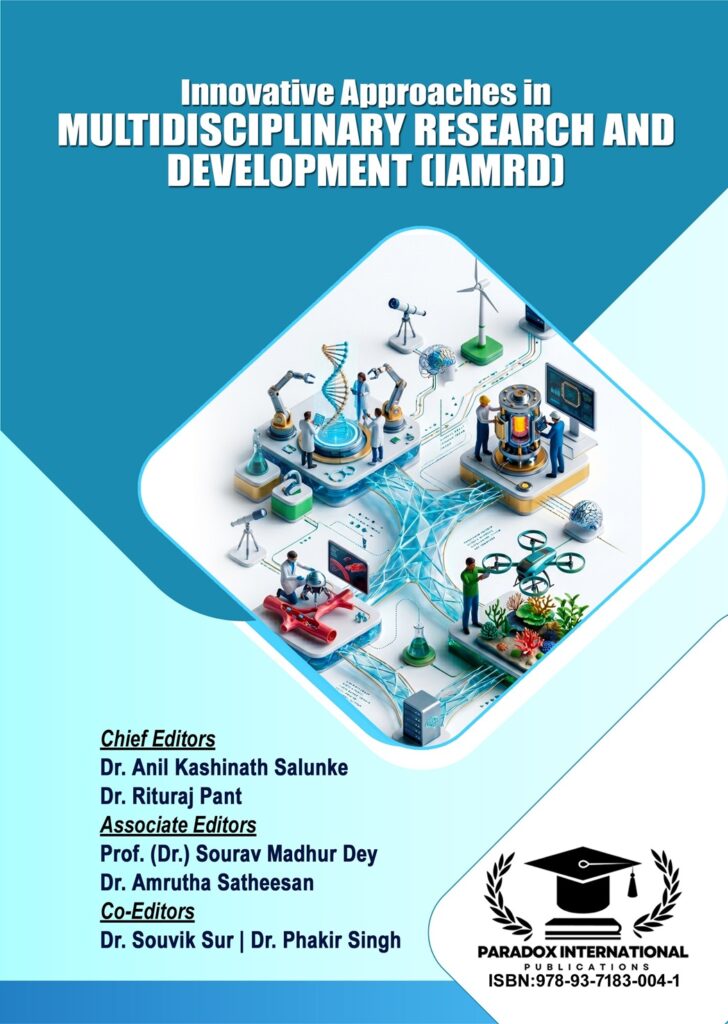
Book Title: Innovative Approaches in Multidisciplinary Research and Development (IAMRD)
Chief Editors: Dr. Anil Kashinath Salunke and Dr. Rituraj Pant
Associate Editors: Prof. (Dr.) Sourav Madhur Dey and Dr. Amrutha Satheesan
Co-Editors: Dr. Souvik Sur and Dr. Phakir Singh
ISBN: 978-93-7183-004-1
Chapter: 2
DOI: https://doi.org/10.59646/708/2
Author: Dr. Anant Sanjayrao Deshpande
Abstract
Stress hormone modulation has become more of a biological biomarker to monitor environmental change in wildlife populations. The purpose of this research paper is to explore the ecological stressors in relation to shifting glucocorticoid levels, specifically cortisol and corticosterone levels, including some of the conditions that result in habitat fragmentation and climate variability, pollution exposure, and human disturbance. The study combines data from physiological field studies with wildlife endocrinology reports and ecological monitoring data to determine the differences in stress hormone responses among species and habitats and to gain an understanding of the relationship between these differences and species interactions. The results suggest that high stress hormone levels and disruption of the diurnal pattern of stress hormone levels are consistent hallmarks of wildlife in highly disturbed environments, and are not seen in stable protected environments. They are highly linked to decreased reproductive success, diminished immune response and changes in foraging and migrating behaviour, making them important as early warning indicators of environmental degradation. However, there are some challenges in deriving universal thresholds for the interpretation of stress because of species-specific variability and adaptive hormonal plasticity. The paper also examines methodological issues regarding the measurement of stress hormones in non-invasive samples like feces, hair and saliva which can increase the field that can be applied while minimizing disturbance of animals. Further it covers the implication of climate change induced stress amplification and the potential of conservation physiology in a management plan for ecosystems. The results highlight that stress hormone regulation is a sensitive, integrative and predictive means of assessing the responses of wildlife to environmental change.