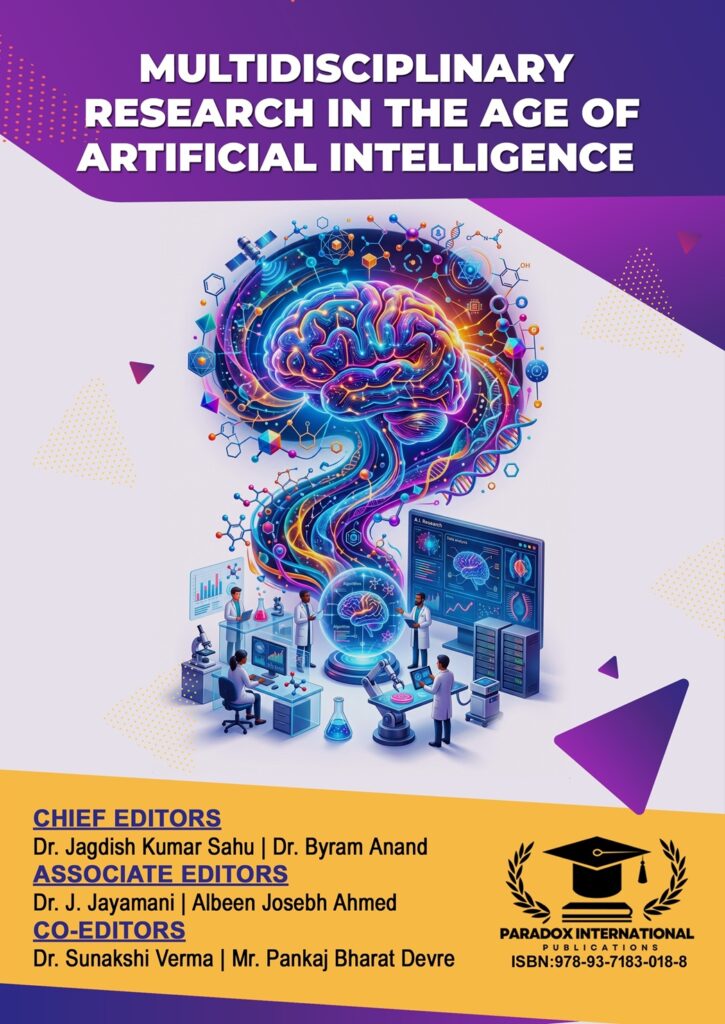
Book Title: Multidisciplinary Research in the Age of Artificial Intelligence
Chief Editors: Dr. Jagdish Kumar Sahu, and Dr. Byram Anand
Associate Editors: Dr. J. Jayamani, and Albeen Josebh Ahmed
Co-Editors: Dr. Sunakshi Verma, and Mr. Pankaj Bharat Devre
ISBN: 978-93-7183-018-8
Chapter: 14
DOI: https://doi.org/10.59646/781/14
Authors: Dr. Soniya Singh, and Dr. Mohd. Irfan
Abstract
Sustainability in farming is a core component of the Fourth Industrial Revolution (4IR). Its goal is to tackle issues stemming from climate change and the demands of a global population expected to hit 9.9 billion by 2050. Developing and implementing new technologies could be a powerful strategy to increase agricultural output and reduce the threat of worldwide food scarcity. In the context of sustainable agriculture, this article examines how technology and conventional farming methods interact dynamically, with a particular emphasis on developments that increase crop quality. Resilient and environmentally friendly farming methods are essential as global issues like resource depletion, population growth, and climate change worsen. A viable way forward is to combine traditional practices like organic farming and conservation agriculture with cutting-edge technologies like biotechnology, smart irrigation systems, and precision farming. Together, these strategies maximize resource utilization and promote ecologically friendly farming practices. Precision agriculture, artificial intelligence (AI), the Internet of Things (IoT), machine learning, big data analytics, cloud computing, drone technology, OMICs, and genome editing technologies particularly CRISPR-CAS9-based genetic engineering are becoming essential tools for sustainable production, crop management, quality control, integrated disease management, and the general growth of the agricultural sector. Additionally, agricultural concerns driven by sustainability and its solutions have been made possible by digital revolutions. In a similar vein, the emergence of new technical advancements at farms equipped with the newest machinery aids in making accurate decisions to boost crop yields. In light of the upcoming problems, all of the aforementioned innovative technologies represent a significant advancement for accurate, intelligent, and sustainable agriculture.
Key Words: Revolution, organic farming, artificial intelligence, sustainable agriculture.