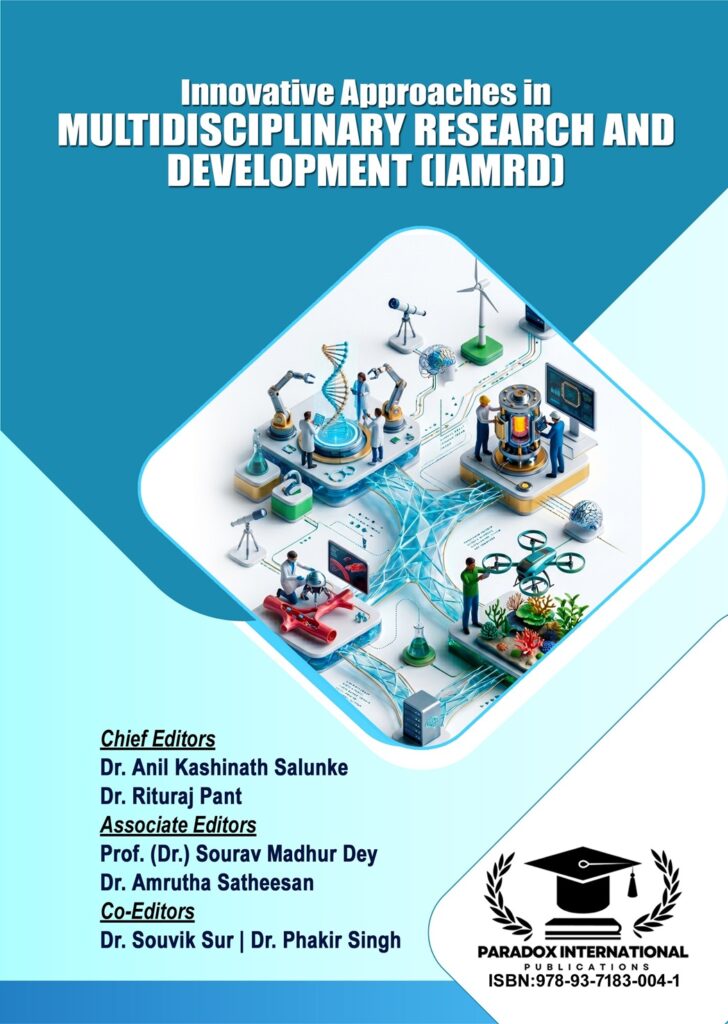
Book Title: Innovative Approaches in Multidisciplinary Research and Development (IAMRD)
Chief Editors: Dr. Anil Kashinath Salunke and Dr. Rituraj Pant
Associate Editors: Prof. (Dr.) Sourav Madhur Dey and Dr. Amrutha Satheesan
Co-Editors: Dr. Souvik Sur and Dr. Phakir Singh
ISBN: 978-93-7183-004-1
Chapter: 3
DOI: https://doi.org/10.59646/708/3
Author: Dr. Anu Thomas
Abstract
The rapid advancement of digital technologies has transformed the educational landscape, particularly in higher education. Web-based learning has emerged as a significant mode of instruction, offering flexibility, accessibility, and interactive learning opportunities for students. The present study examines the awareness, preferences, and challenges associated with web-based learning among undergraduate students in the Mumbai region. The study is based on primary data collected from respondents through a structured questionnaire. Statistical analysis was conducted to understand demographic characteristics, awareness levels, learning preferences, technological accessibility, and barriers affecting online learning experiences. The findings reveal that a majority of students are aware of web-based learning tools and demonstrate a positive attitude toward online education. Hybrid learning emerged as the most preferred mode of instruction, indicating the importance of combining online and offline teaching methods. The study also highlights that mobile phones and laptops are the primary devices used for learning. However, challenges such as poor internet connectivity, device-sharing issues, and infrastructural limitations continue to affect the effectiveness of digital learning. Additionally, participation in online certification courses such as SWAYAM and NPTEL remains comparatively low among students. The research concludes that while web-based learning has gained substantial acceptance among undergraduate learners, there is a need for improved digital infrastructure, enhanced awareness regarding online educational platforms, and institutional support to maximize the benefits of online learning. The study contributes to understanding the evolving educational environment and provides recommendations for strengthening digital education in higher education institutions.
Keywords: Web-based learning, Online education, Hybrid learning, Digital learning, Undergraduate students, Mumbai region, E-learning, Educational technology.